


LET THERE BE HARMONY IN RELATIONSHIPS!

DISCOVER HOW YOU CAN LIVE THE PATH OF LOVE AND PURE INTENTION IN YOUR EVERYDAY LIFE!

The Web of Relationships

All of our lives are woven through with different relationships: family bonds, friendships, workplace connections, romantic relationships, community ties, or even occasional encounters with strangers. Within these relationships, we often experience tension, misunderstandings, or disappointment arising from expectations.
According to the teachings of Krishna consciousness, however, every human relationship is another opportunity for spiritual growth and for practicing love and self-awareness. Creating harmony does not mean that everyone always cooperates with us perfectly, but that we are able to act consciously, from a place of inner peace.

Family Bonds

Family is the first and most enduring relational space in our lives. It is often here that the deepest patterns of our selfishness, impatience, and attachments come to the surface.
According to Krishna consciousness, however, every family bond is an opportunity to practice love and to grow spiritually. If we approach our relationships with family members as a form of service—for example, by paying attention to the other person’s needs, helping when we can, or simply being patient—then the tension that arises from the ego begins to decrease, and love can start to flow.

It is important that in family conflicts we do not focus on trying to change the other person, but instead look for the opportunity for growth within ourselves. If something hurts in a parental or sibling relationship, we can ask ourselves: “What can I learn from this situation? How can I respond with love, even if the other person is not behaving the way I would like?”
It is this inner attitude that creates true harmony.

In Krishna consciousness, family is not only a bond but also a teacher: it teaches patience, acceptance, and selflessness. If we are able to see our family members as fellow travelers on the path of spiritual growth, love flows more easily, and the family atmosphere becomes more harmonious.

Friendships and Communities


In Krishna consciousness, our relationships with friends and communities are not merely social bonds, but also spaces for spiritual growth. It is here that we learn pure love, patience, forgiveness, and selflessness. If we listen attentively to our friends and refrain from judging their thoughts or actions, we create space for the true depth of the relationship to unfold.
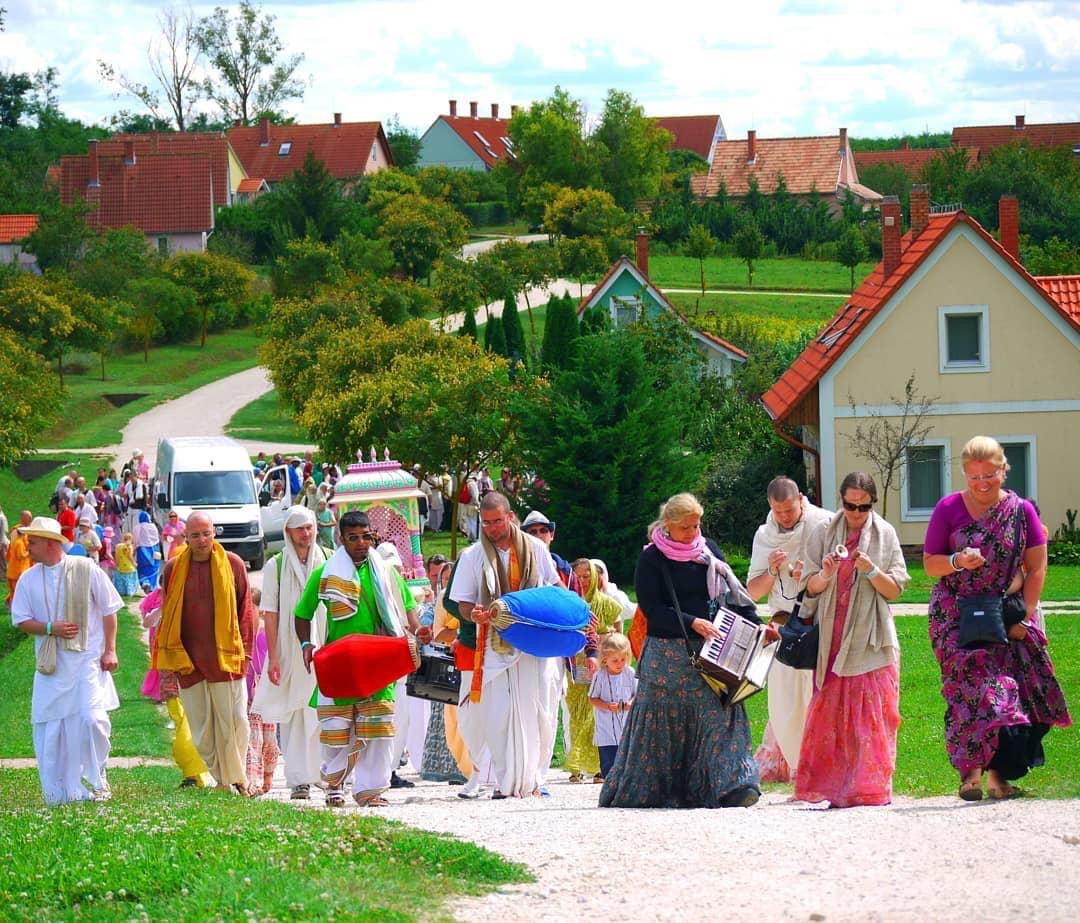
A practical Krishna conscious approach means that we consciously support the other person’s spiritual path: we encourage them when they struggle, we listen without immediately offering advice, and we render selfless service—whether through small acts of help or by giving our time.
It is important that we offer our love and attention not in expectation of something in return, but for the joy of the other person.

In community relationships, awareness is also the key. Take an active part in community life, but in a way that your actions create harmony rather than tension. In situations of disagreement, it is worth reflecting: “How can I serve the community out of love, instead of clinging to being right because of my ego?”
In this way, friendships and community relationships become not only sources of joy, but also tools for deepening inner peace and spiritual growth.

Romantic Relationship

A romantic relationship opens deeper emotional dimensions in our lives, where love, trust, and intimacy are intertwined. In Krishna consciousness, a romantic relationship is not merely a personal attachment, but an opportunity for spiritual growth and for practicing pure love.
Every conflict, misunderstanding, or difficulty can become a chance to deepen patience, acceptance, and self-awareness. Krishna consciousness helps us move beyond the desire to possess, and instead learn how to truly love, to give, and to grow together with the other person.

From a practical perspective, it is important that in our interactions with our partner we are guided not by ego or expectations, but by service and love. This means listening attentively, supporting their goals, and strengthening the relationship through small, selfless gestures—whether it is a kind word, quality time spent together, or being mindful of the other person’s needs.
When we offer our love not in expectation of something in return, but for the joy of our partner, the relationship can provide true harmony and an uplifting experience for both of us.

Workplace Relationships

The workplace is often a challenging environment, as different personalities, expectations, and interests meet there. In Krishna consciousness, work is not merely a task, but an opportunity for spiritual growth and for practicing love.
Every interaction—whether with colleagues, supervisors, or clients—is a chance to develop patience, selflessness, and a spirit of service.

From a practical point of view, workplace conflicts are best handled from a place of love and inner peace. For example, if a colleague struggles with communication or makes a mistake, let anger or frustration not be the driving force. Instead, try to respond with empathy and treat the mistake as an opportunity for learning.
If we carry out our own tasks with awareness and in a spirit of service—not for recognition, but for the shared goal and in the spirit of care—the workplace atmosphere naturally becomes more harmonious.

From the perspective of Krishna consciousness, it is essential that during our work it is not the ego, but spiritual values that guide our actions. We can think of our colleagues as our teachers: every difficulty and misunderstanding is an opportunity to practice patience, attentiveness, and love.
Small, selfless acts—a supportive word, a smile, carrying out our responsibilities conscientiously—not only brighten the day of others, but also strengthen our own inner harmony.

Social and Casual Relationships

Even brief, casual encounters—such as with strangers in a shop, on the street, or while traveling—offer opportunities for Krishna conscious practice. In these interactions, the goal is not deep attachment, but the expression of inner peace and loving awareness.
A kind smile, a helpful word, assistance offered with patience, or simple attentiveness are all forms of service toward another person.

From the perspective of Krishna consciousness, even these brief interactions are teachers: they teach us not to judge, not to cling to the ego, and to recognize the opportunity to have a positive impact on the world through love.
When we approach every encounter in this way, even the small moments of everyday life become harmonious and meaningful spaces of connection.

Inner Harmony and Learning in Every Relationship

The quality of our relationships always arises from our inner harmony. If we consciously work on ourselves—through meditation, self-reflection, prayer, or selfless actions—love and peace begin to flow from within, and this becomes tangible in every relationship.
Every human encounter is an opportunity to practice patience, love, and awareness, and at the same time it reflects where we stand on the path of spiritual growth. When we view our relationships through the lens of Krishna consciousness, they naturally become more harmonious, and every interaction transforms into a meaningful lesson.

🙋 Experience the Harmony in Krishna Valley!

If you would like to put into practice all that you have read about relationships and inner peace, come and visit the Krishna Valley Guesthouses! Here, nature, community, and silence offer you the opportunity to experience love, patience, and awareness in every moment.
Every conversation, walk, meal, and shared program becomes a step toward inner harmony.

Ayurvedic Practices to Refresh Your Body and Mind in Spring

Spring Renewal with the Wisdom of Ayurveda

The Awakening of Nature – The Renewal of Body and Soul

As nature comes back to life, our body and mind also long for freshness and purification. Ayurveda, the ancient Indian philosophy of health, offers special spring cleansing and energy-balancing practices that help prepare the body and mind for the warmer months.

According to Ayurveda, spring is the Vata–Pitta season: the light, changeable Vata energies and the warm, sharp Pitta energies are both active. This can increase internal tension, intensify digestion, and also raise the tendency toward inflammation.
Below you will find a complete daily Ayurvedic spring routine that helps harmonize the energies of both doshas and supports physical and mental renewal.

Morning Rituals for Fresh Energy

6:30–7:00 – Warm Water with Lemon
After waking up, it is recommended to drink a glass of lukewarm water with lemon juice. This not only stimulates digestion but also helps calm Vata energies.
You can enhance it with a pinch of Himalayan salt or freshly grated ginger, which helps boost metabolism.

7:00–7:20 – Breathing Exercises (Pranayama)
Simple breathing exercises such as Anulom Vilom or Kapalabhati help reduce tension, refresh the mind, and supply the body with oxygen.
Slow and conscious breathing also helps harmonize the intense fire of Pitta.

7:20–7:50 – Light Walk in Nature
Fresh air, birdsong, and the energy of sunlight help harmonize both body and mind. It also stabilizes the mobile energies of Vata and fills the body with fresh vitality.
If possible, walk barefoot on the grass to absorb the grounding energy of the earth.

2. Ayurvedic Spring Breakfast Ideas


Breakfast should be light, warm, and nourishing. For example:

Oatmeal with fresh fruit: oats cooked in water with a little coconut milk, grated apple, and cinnamon perfectly balance Vata–Pitta energies.

Lentil and vegetable purée: an easy-to-digest, Pitta-friendly dish, seasoned with a little coriander and turmeric.

Fruit smoothie: banana, pear, a handful of spinach, a pinch of cardamom, and a spoonful of chia seeds. It has a harmonizing effect.

3. Daily Meal Rhythm

For the spring Pitta–Vata combination, light, refreshing yet warm foods are the most ideal.

10:00–11:00 – Small Refreshing Snack
In the late morning, eating a small portion of fresh vegetables or a few nuts can energize the body and help calm Vata.

12:30–13:30 – Ayurvedic Lunch
Warm, easy-to-digest soup: green pea or zucchini cream soup with a little turmeric.
Main dish: brown rice or quinoa with fresh vegetables and a small portion of chickpeas.
Fresh spices: coriander, curry leaves, and a little ginger.
These foods do not overstimulate the Pitta fire, while also helping stabilize Vata energies.

16:00 – Afternoon Tea
In the afternoon, a spiced herbal tea (for example cinnamon, cardamom, and a pinch of ginger) helps support a calm and balanced state of well-being.

18:30–19:00 – Light Dinner
Steamed vegetables with a small portion of lentils, or warm oatmeal.
Avoid heavy, fatty foods so that the Pitta dosha does not become excessive.

4. Ayurvedic Body Care

Sva Abhyanga, or self-oil massage, performed in the morning or evening with warm sesame or coconut oil, excellently harmonizes the Vata–Pitta combination.
It stimulates circulation, nourishes the skin, and reduces the drying effects of Vata, while also helping balance Pitta energy.
After the massage, allow the oil to absorb for a short time (15–20 minutes), then take a shower with lukewarm water.

5. Meditation and Spiritual Cleansing

Spring renewal is important for the soul as well.
A daily 15–30 minutes of meditation, focusing on the breath and bodily sensations, helps calm the restless Vata energy and harmonize the intensity of Pitta.
During the day, short mindfulness practices, such as paying attention to the sounds of nature or your own breathing, can also support mental clarity.
In the evening, try a gratitude practice: write down three things you are grateful for. This helps support mental purification.

6. In Harmony with Nature

The essence of spring renewal is aligning the rhythm of the body, the mind, and nature.
Pay attention to the signals of your body, allow the fresh air, sunshine, and the quiet of nature to flow through you, and end the day with a short gratitude practice or meditation that strengthens inner peace and the harmonious balance of Vata–Pitta energies.

7. Spring Renewal in Krishna Valley

You can practice the Ayurvedic routines and recipes described above in a special environment at the Krishna Valley Guesthouses:

  • A nature-close retreat, where birdsong and fresh air support physical and spiritual rejuvenation.
  • Ayurvedic, light, and refreshing meals in the guesthouse restaurant that help maintain the balance of Pitta during the spring season.
  • Quiet meditation corners, pavilions, and the peaceful atmosphere of the farm provide the perfect setting for inner purification.
  • You can also enjoy a digital detox with us. Leave your devices at home or simply switch them off, and fully experience the magical spiritual and natural harmony of Krishna Valley.

We look forward to welcoming you to Krishna Valley! Hare Krishna!

HOW DOES A NATURAL LIFESTYLE SUPPORT INNER PEACE?

SOUL-STRENGTHENING THOUGHTS FROM KRISHNA VALLEY

You have surely experienced that special kind of magic when you step away from the noise of everyday life and arrive at a place where everything moves in harmony with the rhythm of nature. Krishna Valley is just such a refuge: here the days flow more gently, the air is crystal-clear and refreshing, and the body, mind, and soul can all truly unwind. I myself experienced here for the first time how deeply a natural way of living can calm and harmonise a person.

When you follow a lifestyle aligned with nature, your body and nervous system are able to function in the environment they are originally tuned for. The slower rhythm, clean air, and natural sounds and light all contribute to clearing the mind, releasing tension, and allowing inner peace to arise.

So now let’s see how you can take this calm and harmony home with you into your own everyday life – what can you do to allow the peace of nature to be present in your life as well?

1. Slow down your pace!

When we live in the constant rush of everyday life, the nervous system is continuously overloaded. In nature, however, things happen in their own rhythm – trees do not rush, and the sun slowly sinks below the horizon.

If you learn to slow down your own pace, both your body and your soul can return to harmony. Allow the silence within you to take the lead and gradually smooth away all inner tension.

Tips:

  • Walking: Long, slow walks in a park or in the forest help calm the mind.
  • Morning ritual: Start your day with a short, calming practice. Spend 2–3 minutes observing the sunrise, or slowly sip a hot drink while simply being present with the moment. You can weave similar mindful moments into any time of day to help preserve calm and awareness throughout your day.
  • Conscious breathing: Pause for 1–2 minutes and focus solely on your breath. Breathe slowly and deeply, letting the exhale be longer than the inhale. If possible, stand by a window and look outside, especially if it opens onto a quiet, peaceful view.
  • Caffeine-free breaks: Take a 5-minute “digital silence” every hour, when neither your phone nor your computer is within reach.
  • Mindful presence: When you are doing something, try to slow down each movement and pay attention to the sensations, sounds, and scents around you.

2. Connect with the energy of the earth!


The energy of the earth provides stability and a sense of security. When you touch the ground, care for plants, or simply spend time in nature, your body returns to its natural balance and tension begins to dissolve.

Tips:

  • Collect things from nature: stones, branches, leaves, pebbles. Hold them in your hand for a few moments, or place them in your home so that the energy of the earth can be present in your everyday life.
  • Gardening: Work in the garden with your bare hands, plant and care for plants.
  • Walk barefoot outdoors! This is one of the most powerful stress-relief practices.
  • Lean against a tree or a large rock: Feel their stability and calm, and let it flow through your body and your mind.
  • Connect with the ground during meditation: Sit directly on the earth and allow it to fully support the weight of your body. Feel and attune yourself to the energy of the earth.

3. Create a peaceful, clean space around you!

The environment you live in has a profound influence on your mind. Clutter, overcrowding, and artificial noise can increase stress, while a natural, clean, and harmonious space supports inner calm.

Tips:

  • Order: Keep your living space simple and tidy. Cleanliness also strengthens inner order.
  • Reorganise your surroundings: Throw away or donate unnecessary items that disturb the space.
  • Let in natural light: Open the windows so fresh air can flow through the space. And allow sunlight to stream in through the windows as well.
  • Place natural materials around you: wood, stone, wool, cotton – these soften the space and radiate a sense of calm.
  • Minimise noise: Switch off unnecessary electronic devices, lower the volume, or eliminate background noise altogether.
  • Create a peaceful corner: Set up a small space with an armchair, cushions, or a soft rug where you can rest, slow down, and find quiet whenever you need it.
  • Tidying up: Daily or weekly tidying not only makes the space more harmonious, but also gently and almost unnoticed calms the mind.

4. Eat mindfully!

Natural ingredients and mindful eating nourish not only your body, but also help clear the mind. Eating is also an opportunity to connect with your body, slow down, and be fully present in the moment. As you direct your attention to flavours, aromas, and the signals of your body, you create an ever-deepening sense of inner harmony.

Tips:

  • Pay attention to ingredients: Whenever possible, choose fresh, seasonal, and natural foods, and avoid highly processed products.
  • Eat slowly: Chew thoroughly and notice the flavours, aromas, and textures. This way, digestion also becomes easier.
  • Focus only on the meal while eating: Turn off your phone and the TV so that both your body and mind can give their full attention to the food.
  • Listen to your body’s signals: Eat until you genuinely feel satisfied, not beyond. It’s not necessary to finish everything on your plate if your body has already received enough nourishment.
  • Smaller portions, more frequent meals: Eating smaller amounts more often is easier to digest and places less strain on the nervous system.
  • Calming drinks: Herbal teas such as chamomile, lemon balm, mint, or lemon balm help support digestion and maintain a sense of calm.
  • Pre-meal grounding: For example, take a minute to observe the colours and aromas of your food before you begin eating.

5. Move your body outdoors

Nature not only brings calm, but also gives us energy when we move within it. Conscious movement connected to nature helps bring the body and mind back into balance. When your breath aligns with the rhythm of your surroundings, movement turns into a genuine inner flow.

Tips:

  • Walking outdoors: Take a slow, mindful walk in a park, forest, or meadow. Notice the ground beneath your feet, the rustling of leaves, and your breath.
  • Jogging in nature: Run short distances on forest trails or in a park, paying attention to your body’s movements and the sounds of the surroundings.
  • Barefoot: Walk barefoot on grass, sand, or natural soil. This not only has a grounding effect, but also strengthens the muscles of the feet.
  • Simple stretching: Stretch outdoors in the fresh air, allowing your body to relax and your breathing to deepen.
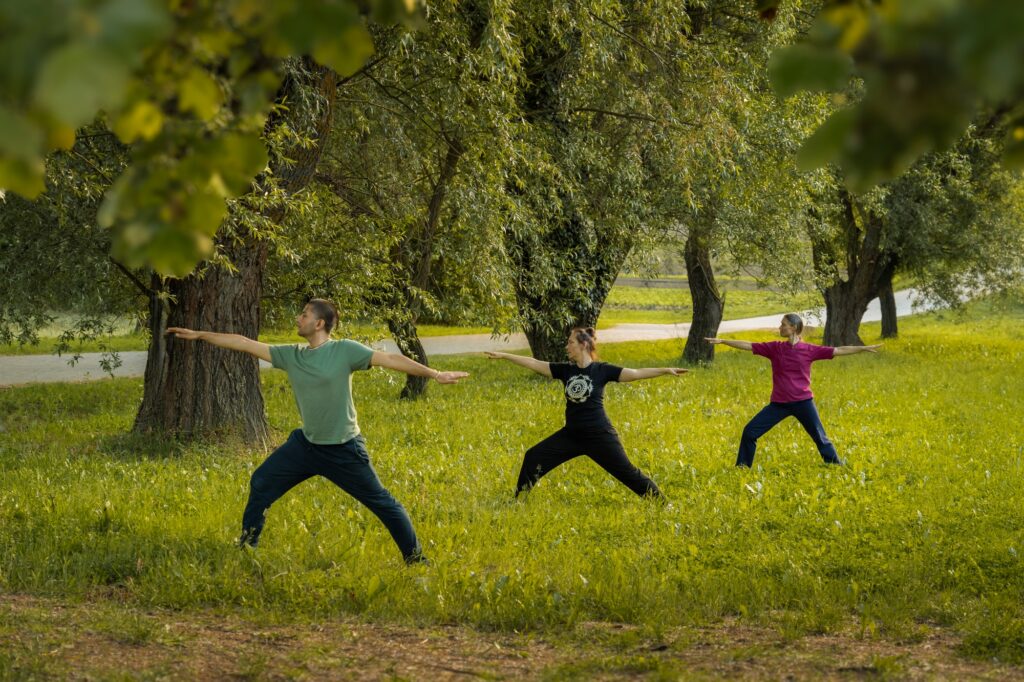
  • Gentle yoga or movement: Practise a few asanas in your garden or in a park, aligning your movements with the rhythm of nature.
  • Breathing exercises: You can combine walking or stretching with slow, conscious breathing, allowing both body and mind to harmonise. Of course, breathing exercises can also be practised on their own.
  • Dancing outdoors: Allow your body to move freely, whether in nature or on a terrace. Follow your own rhythm or the mood of your surroundings.

6. Engage your senses!

Nature offers sights, sounds, scents, and sensations all at once. When you consciously tune into these sensory impressions, your mind gradually settles and becomes calm. As your senses clear, you connect more and more deeply with the peace of the present moment.

KV virág park

Tips:

  • Hearing: Sit down in nature, close your eyes, and listen to the birds chirping, the rustling of the wind, and the gentle sound of flowing water.
  • Sight: Observe the play of light and shadow, the movement of leaves, and the shapes of the clouds in the sky.
  • Smell: Breathe in the scent of fresh earth, flowers, trees, and clean air. Allow this experience to flow through all of your senses.
  • Touch: Hold a tree, a pebble, or a leaf, and notice its surface, temperature, and texture.
  • Taste: Try a piece of fresh fruit or an herb from the garden, paying attention to every nuance of its flavour and aroma.
  • Mindful movement: With every movement, bring your attention to your senses. For example, when you pour water or touch the soil, focus on what you see, hear, and feel.
  • Integrated sensing: Try engaging several senses at once—listen while touching a tree, and at the same time observe the light filtering through the leaves.

7. Awaken your inner light!

Inner peace is born when your attention turns inward and you experience the calm of your own inner world. Connecting with nature gives you the opportunity to experience your inner light. As you sit quietly, your soul slowly opens, and strength begins to glow within you like a gentle inner light. This light guides you through the chaos of everyday life and leads you back to your true inner centre.

Tips:

  • Daily moments of stillness: Set aside at least 5–10 minutes each day for meditation or quiet inward reflection.
  • Observe your breath: Breathe slowly and deeply, noticing the movement of air within your body. This helps calm the mind.
  • Inner visualisation: Imagine the energy flowing through your body as light that moves, cleanses, and harmonises.
  • Gratitude practice: Each day, write down what you are grateful for. This helps strengthen positive energy and your inner light.
  • Inner journal: Write down your thoughts and feelings to become more aware of what is happening within you.
  • Small moments of awareness: Pay attention to your body’s signals, your surroundings, and the present moment. Awareness awakens the inner light.
  • Loving presence: Think of someone or something with love, and allow this warmth to flow through your body and mind.

🌸 Body – soul – spirit

A natural lifestyle not only supports physical health, but also nourishes the soul. Slowing down, connecting with the earth, mindful eating, a harmonious space, movement, awakening the senses, and the inner light — all of these together create true inner peace.

🙋 Come visit us!

If you would like to experience all of this firsthand, we warmly welcome you to Krishna Valley and our guesthouses. One night embraced by nature and the quiet of the valley, and you will wake up differently the next day—more open to letting the rhythm of inner peace flow through your whole life.

SUPPORT YOUR BODY DURING THE COLD MONTHS!

AUTUMN–WINTER AYURVEDIC GUIDE

When in the morning you can only escape from under the blanket with heroic effort, and your tea cools down faster than you can say “Brrrr,” you can be sure of one thing: autumn has arrived — and with it, the Vata-dominant season.
If you don’t know what that means, don’t worry — I’ll explain it! During this period, cold, dry, and mobile energy becomes dominant. In other words: we feel cold, our skin dries out, our hair gets static, and our nerves tend to get a little overstimulated.

But the good news is that according to Ayurveda, there’s a remedy for everything. And what’s more — it can be delicious, fragrant, and wonderfully comforting too!

🥘 1. Eat warm, richer, and softer foods!

This is not the season for salads. Yes — finally a reason to skip the ice-cold morning smoothie!
In autumn and winter, your body craves warm, oily, nourishing foods. Imagine that with every bite, you’re gently rekindling your inner fire more and more!

  • Warm soups, dhals, stews, and oven-baked vegetables are your best friends right now.
  • Use plenty of ghee (clarified butter) or good-quality olive oil!
  • Spices are especially important right now: ginger, cinnamon, cardamom, cloves — these quite literally ignite your digestion and inner fire.

And if you’ve ever felt guilty for craving “yet another warm, hearty dish,” you can finally relax: you can go ahead and enjoy it without any guilt whatsoever. 😉 Your body knows exactly what it needs — and right now, it’s giving the green light to exactly these kinds of foods.

🕯️ 2. Warm yourself — inside and out!

According to Ayurveda, cold is not just a temperature — it’s a quality.
So don’t rely only on your thermos — protect yourself with your lifestyle too!
In the mornings, massage your skin with a little sesame oil, wait a bit, and then take a warm shower! It not only softens the skin, but also helps detoxify through the skin and soothes the nervous system!

And in the evening, a hot ginger tea can help you release the tension of the day.


🌙 3. Rest like a wise little marmot!

In the cold months, nature withdraws — and honestly, we don’t have to heroically keep going until midnight every evening either.
If you go to bed earlier and allow your body to regenerate, you’ll experience wonders.
Sleep at this time of year is more healing than any herbal capsule.
This is when the body processes the day’s experiences, recharges the immune system, and prepares you for the next day.

And if your body doesn’t let go of tension easily, try a simple Ayurvedic evening routine: light a candle, sip warm milk with cardamom and turmeric, then take slow, deep breaths and observe as all inner restlessness and noise gradually quiet down.

☀️ 4. Find a steady rhythm in your day!

During this season, regularity is quite literally life-saving.
Vata energy loves variety — but that’s exactly what makes us scattered and restless.
The best thing you can do is give your body the safety of consistency:

  • Eat at roughly the same times,
  • Go to bed at a consistent hour,
  • And if possible, set aside a little time each day for some inward-focused “me time”!


meditation

This could be a short morning meditation, some breathing exercises, or a peaceful walk in nature. The quiet paths, gardens, and parks of Krishna Valley, for example, offer the perfect setting for this.

💙 5. Krishna-conscious support during the Vata season

In the cold, Vata-dominant season, the body and mind tend toward restlessness and fragmentation. At such times, it’s worth weaving a little Krishna consciousness into your daily life: quietly repeating or chanting the Hare Krishna mahā-mantra helps maintain inner balance.

Another simple but powerful method for winter evenings is to read from Srila Prabhupada’s books. As you follow the lines, you may feel as if our teacher were sitting right beside you, his presence radiating calm and peace.
When you turn your attention toward Krishna, the inner noise quiets down, and the harmony between body and soul becomes stronger. Thus, the Vata season is supported not only by Ayurvedic nutrition and routine, but also by inner awareness and Krishna consciousness — bringing true inner warmth and tranquility.

🌸 Slow down, warm up, and love yourself!

Ayurveda’s message during this season is very simple:
Slow down, warm up, and love yourself!
Your body is not your enemy — it’s your best friend; it’s just asking for a little extra attention right now.

🙋 Come visit us!

If you’d like to immerse yourself more deeply in this lifestyle, come visit Krishna Valley — where you can recharge not only your body but also your soul, with warm meals, peaceful surroundings, and lots and lots of love!

VEGAN NUTRITION – A STEP TOWARDS HEALING YOURSELF AND THE EARTH

HEALTH, ENVIRONMENTAL PROTECTION AND CONSCIOUSNESS ALL IN ONE

In recent years, more and more people have been showing interest in plant-based eating, and many are curious about what impact it could have on their lives, even if they try a vegan diet only for a short period of time. The essence of vegan nutrition is that it completely excludes animal-derived ingredients: not only that it doesn’t contain meat, but also no dairy products, eggs, or other foods of animal origin.

Health and Lightness

A plant-based diet is easy to digest and full of fiber, vitamins, and minerals.


Many people report feeling more energetic and refreshed, and that their digestion improves. A plant-based diet can help balance body weight, stabilize blood sugar levels, and also support cardiovascular health. Thanks to lighter digestion, many people experience less fatigue and greater vitality in their daily lives.

Environmental Protection and Sustainability

Choosing a vegan diet not only has a positive effect on an individual’s health but also helps protect the planet. Animal farming requires enormous amounts of water and feed, and it also contributes significantly to greenhouse gas emissions. In contrast, producing plant-based foods has a much smaller ecological footprint. Those who consume more plant-based foods reduce water and land use and contribute to the preservation of natural resources. Those who consume more plant-based foods reduce water and land use and contribute to the preservation of natural resources.
With such a conscious choice, we not only protect the planet’s resources but also contribute to mitigating climate change and creating a more livable future for everyone.


Compassion and Consciousness

Behind vegan nutrition, there is often a deeper conviction: compassion for all living beings. Giving up meat and animal products is a conscious choice that expresses respect for the sanctity of life. This lifestyle helps us live in harmony not only with our body but also with our soul, as the principle of non-violence (ahimsā) is one of the most important spiritual foundations.
Those who eat this way not only take care of their own health but also of the world as a whole: they cause less suffering to animals, protect nature, and develop a more conscious relationship with food. A vegan or vegetarian lifestyle is thus also a path of inner growth, connecting the body, mind, and soul.

What do Krishna devotees eat – and what don’t they eat?

Krishna devotees follow a strict vegetarian diet, completely excluding meat, fish, and eggs. In addition, they avoid consuming alliums—such as onions, garlic, and leeks—because, according to tradition, these negatively affect the mind and can disturb meditation and spiritual practices.

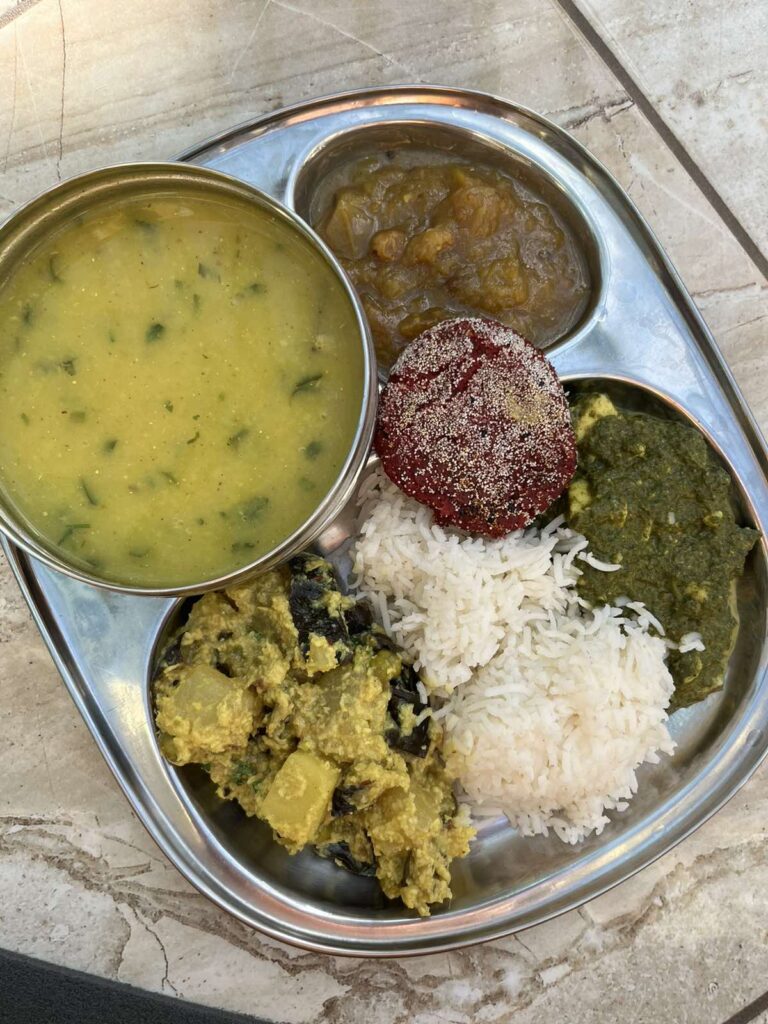
The foundation of their meals consists of fresh vegetables, fruits, grains, legumes, nuts, and various spices. Our culinary art is varied and flavorful: we prepare hearty vegetable main dishes, delicious sauces, freshly baked breads (such as chapati), fragrant rice dishes, and a wide range of desserts.

A special feature is that every dish is prepared with love and a pure heart, and then offered to Krishna. Only after this offering do we eat, so the meal becomes not just physical nourishment but also a spiritual experience and a connection with the Divine.


A Taste of the Spiritual Kitchen

If you’d like to taste food prepared by Krishna devotees, visit the Govinda Restaurant, located in the heart of Krishna Valley! Here, you will always find fresh, flavorful, and nourishing vegetarian dishes. The dishes are not only delicious but also carry a special energy, as they are prepared with an offering.

The Govinda Restaurant is an ideal place to explore the variety of plant-based cuisine, while experiencing the peaceful, spiritual atmosphere of Krishna Valley and enjoying the comfort of our guesthouses.

Taste Consciousness at Govinda in Krishna Valley!

Trying a vegan or vegetarian diet can bring not only physical and mental refreshment but also guide you toward a more conscious and compassionate lifestyle. At the Govinda Restaurant in Krishna Valley, you can experience all of this in practice—with fresh, delicious, lovingly prepared meals in a unique, spiritual environment.

Come visit us!

If you’d like to experience and try the benefits of a vegan diet up close, book a room at the Krishna Valley Guesthouses and spend a few days on the farm! At the Govinda Restaurant, everything is provided for you to taste fresh, delicious plant-based meals, while the spiritual environment and ancient wisdom help you rediscover your inner balance and harmonize with yourself and nature.

How to bring the body and soul into balance in everyday life?

The secrets of Ayurveda for everyone

Ayurveda, the science of life, is an ancient Indian healing system dating back more than five thousand years, which has preserved its relevance and power to this day. Although many new sciences and technologies have emerged over time, the profound wisdom of Ayurveda still helps us live in harmony amidst the noise, stress, and challenges of the modern world. How can we incorporate this ancient system into our fast-paced modern lives? What treasures do the Ayurvedic teachings hold that support our physical and spiritual well-being? Let’s examine this together!

What is ayurveda?

The literal meaning of the word Ayurveda is: “ayus” = life, “veda” = knowledge, that is, the “science of life.” This holistic system of health preservation teaches that a person’s physical, mental, and spiritual aspects form a close unity, and we can only be truly healthy when these components are in balance.

According to Ayurveda, every person is unique, so there is no single method suitable for everyone — our body and mind each have a unique “dosha” combination, which determines the lifestyle and diet that will benefit us most.

Dosha types: the key to individuality

Ayurveda distinguishes three fundamental energies, or doshas:

  • Vata – the element of air and ether, which governs the nervous system, movement, and respiration. People with a Vata constitution are generally slender, quick-thinking, and creative, but they tend to be prone to anxiety and feeling cold.
  • Pitta – the element of fire and water, which is the center of digestion, metabolism, and energy. People with a Pitta constitution often have a medium build, strong will, and intense nature, but they tend to be prone to inflammation and irritability.
  • Kapha – the element of earth and water, responsible for the body’s structure, stability, and immunity. People with a Kapha constitution are generally sturdily built, calm, and loyal, but they tend to be prone to weight gain and lethargy.

The doshas are present in each of us in different proportions, and the foundation of Ayurveda is to recognize our own constitutional type and then tailor our lifestyle accordingly.


Ayurvedic lifestyle in practice – simple, yet effective

Ayurveda is not an abstract philosophy, but a very practical guide that helps maintain the harmony of our body and mind in daily life. Here are some fundamental areas where ancient wisdom can be easily incorporated into your daily routine:

1. Nutrition – the healing power

According to Ayurveda, food is not only a source of nutrients but also a source of energy and medicine. It is recommended to eat seasonal, fresh, local, and unprocessed foods, and to ensure that our meals align with our dosha. For example, it is important for Vata types to consume warm, oily, and nourishing foods, while Ayurveda recommends cooling, milder flavors for Pitta types. For Kapha types, light, spiced foods can help maintain balance.

2. Morning rituals

Morning is a perfect time to cleanse our body and prepare it for the day. Ayurvedic practices include oil pulling – rinsing with a small amount of sesame or coconut oil, which supports oral hygiene and helps remove toxins. It is also recommended to clean the tongue and drink warm water, which awakens the digestive system.


hatha yoga in Krishna Valley
3. Movement and breathing

Physical activity – whether yoga, walking, or another gentle form of exercise – is essential for the health of both body and mind. Ayurveda emphasizes the importance of breathing exercises (pranayama), which help harmonize energy flow, reduce stress, and improve concentration.


4. Sleep and rest

The quality of sleep fundamentally affects our health. Ayurveda recommends going to bed by around 10 PM so that the body can properly regenerate. Winding down before bed, through meditation or a warm bath, helps promote restful sleep.

meditation
5. Mental cleansing

According to Ayurvedic teachings, a clear and balanced mind is essential for good health. Meditation, mindfulness, and regular inward reflection support mental harmony and help manage the stresses of modern life.

The intertwining of Ayurveda and spiritual life in Krishna Valley

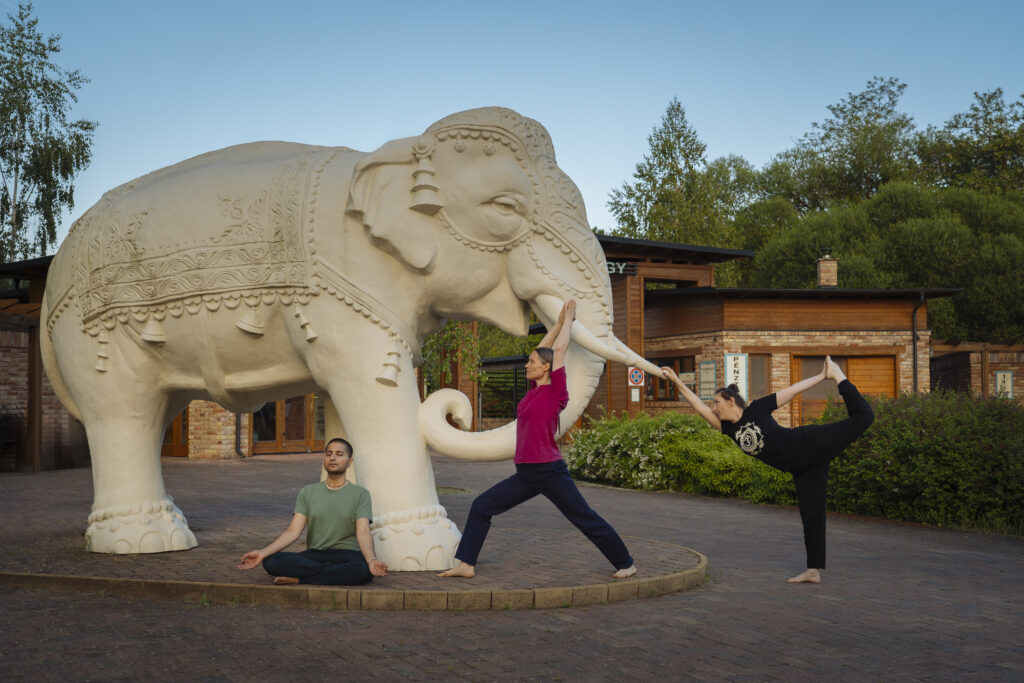
The Krishna Valley Guesthouses are not just accommodations, but spiritual oases where creating physical and mental harmony is the primary goal. For the first time this year, our guests have the opportunity to learn about the Ayurvedic lifestyle during a weekend program, while for years we have been hosting spiritual, meditation, and yoga retreats. With us, you can experience the closeness of nature, which in itself has a healing power.

In our restaurant, we offer the flavors of traditional, vegetarian Ayurvedic cuisine, which not only nourish but also energize the body. We believe that the balance of body and soul arises from a conscious lifestyle, and that every small decision, meal, or habit contributes to creating it.

How to get started?

Ayurveda does not demand sudden changes; rather, it recommends small, step-by-step habits that can be gradually incorporated. With a little attention, listening to ourselves, and practicing acceptance, we can already begin the path toward a more balanced and healthier life.

Come visit us!

If you want to explore the Ayurvedic lifestyle more deeply, receive personalized guidance, or simply rejuvenate your body and mind, we warmly welcome you to the Krishna Valley Guesthouses! Everything here is in place for you to rediscover your inner balance with the help of ancient wisdom and to find harmony with yourself and nature.