


CHRISTMAS IN KRISHNA VALLEY – ARE THERE CHRISTMAS TREES, GIFTS AND CELEBRATIONS?
WHAT DOES CHRISTMAS MEAN TO DEVOTEES?
Christmas trees, gifts, family lunches, festive lights… In December, the excitement of preparing for Christmas can be felt almost everywhere. But what happens in Krishna Valley at this time of year? Do we give each other gifts? What do we think about Jesus Christ? And if we do not celebrate Christmas, why do we organise large-scale Christmas food distributions?
The short answer is that Christmas is not a Vaiṣṇava festival, so we, as DEVOTEES, do not observe it as a religious holiday.
In everyday life, however, the situation is much more nuanced.
WHY DON’T DEVOTEES CELEBRATE CHRISTMAS?
Krishna consciousness belongs to the Vaiṣṇava religious tradition, which centres on loving service to Kṛṣṇa. We have our own festivals, ceremonies and traditions, many of which date back thousands of years.
Christmas is a Christian celebration of the birth of Jesus Christ and is therefore not part of the Vaiṣṇava festival calendar.
However, this does not mean that devotees reject Christianity or the teachings of Jesus. Quite the opposite: they have great respect for those who sincerely teach others to love and serve God.
And this is where the story becomes particularly interesting.
WHAT DO DEVOTEES THINK ABOUT JESUS CHRIST?
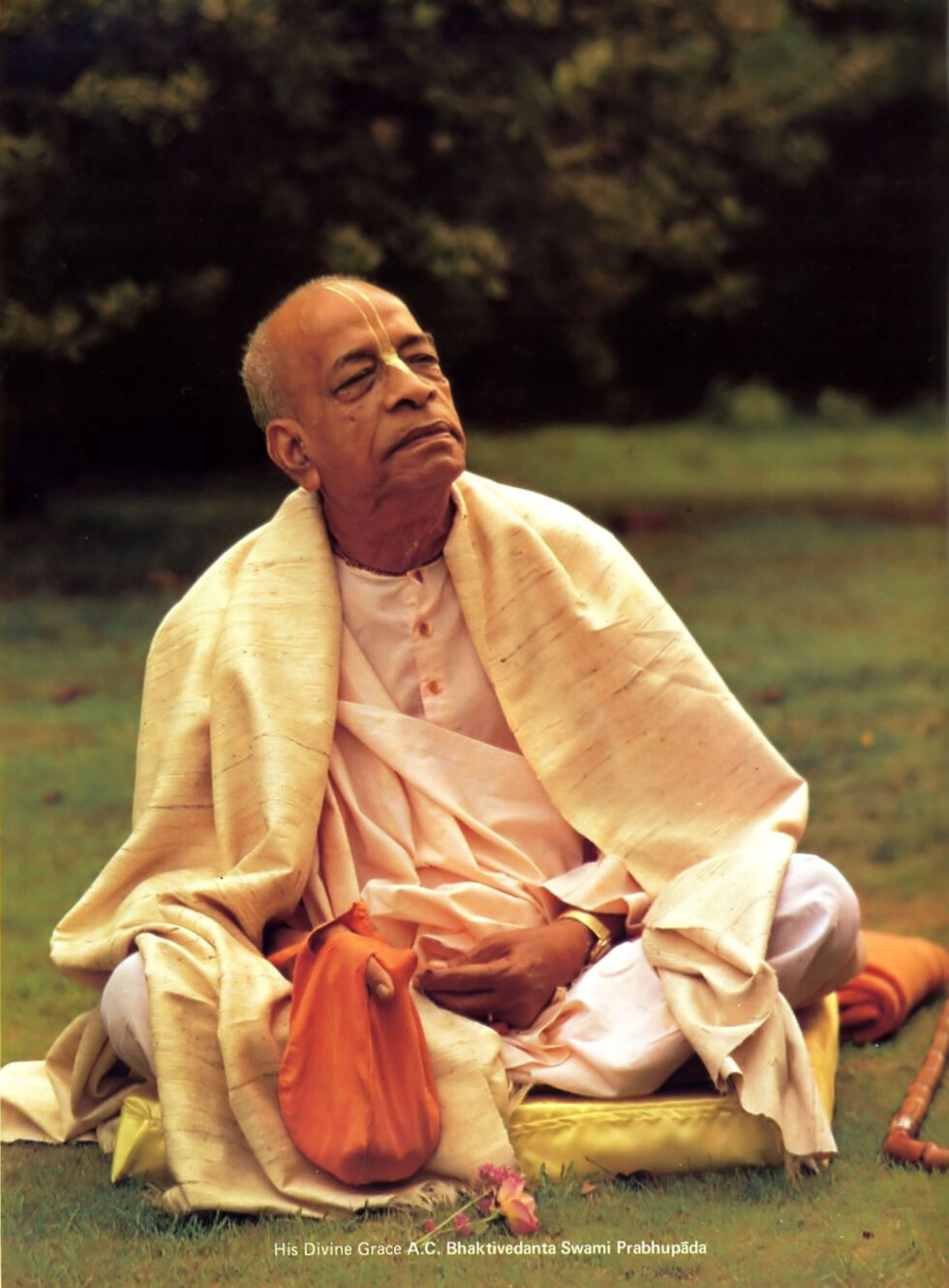
Many people are surprised to learn that Śrīla Prabhupāda, the founder of the International Society for Krishna Consciousness (ISKCON), spoke of Jesus Christ with great respect.
One of the fundamental principles of Śrīla Prabhupāda’s teachings is that the purpose of sincere religious practice is to awaken our relationship with God and our love for Him. From this perspective, he recognised important common ground among different religious traditions.
In a lecture in 1966, while speaking about Christmas, he reminded his audience that the origins of the celebration are rooted in God consciousness:
“Christ came to give you God consciousness.”
According to Śrīla Prabhupāda, the essence of Jesus’ mission was to bring people closer to God.
In another conversation, he also emphasised that devotees are not opposed to the teachings of Jesus, since he too taught people about God.<br/>Devotees therefore respect Jesus Christ as a devoted servant of God and a spiritual teacher, while following their own religious traditions.<br/>This is an important distinction: respecting someone’s teachings does not necessarily mean observing the religious festivals associated with them.
SO WHAT IS THE DEVOTEES’ “CHRISTMAS”?
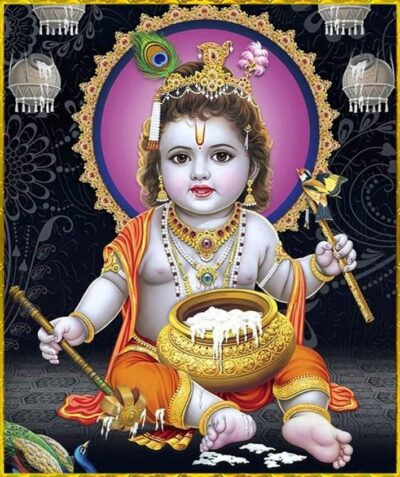
Just as Christians celebrate the birth of Jesus Christ at Christmas, we celebrate the appearance of Kṛṣṇa on Janmāṣṭamī.
Janmāṣṭamī commemorates Kṛṣṇa’s appearance on Earth and is considered one of the most important festivals in the Vaiṣṇava tradition.
Unlike Christmas, however, our festival takes place in late summer or early autumn, with its date varying each year according to the lunar calendar.
In Krishna Valley, we mark this occasion with special temple programmes, singing, prayers, fasting and festive offerings. We decorate the temple, the community comes together to celebrate, and Kṛṣṇa is at the heart of the day’s festivities.
The religious significance of the two festivals is, of course, not the same. The parallel lies in the fact that both commemorate the appearance of a central figure in their respective religious traditions.
AND WHAT IF OTHER FAMILY MEMBERS CELEBRATE CHRISTMAS?
Perhaps this is the question we hear the least about.
A significant number of devotees were not born into Krishna-conscious families. Many discovered the Vaiṣṇava teachings as adults, while their parents, siblings and relatives continue to follow their traditional family customs.
And choosing a different religious path does not mean that someone loves their family any less.
This is why many devotees visit their parents at Christmas, meet up with relatives and spend part of the festive season together.
Not necessarily because they celebrate Christmas themselves, but because they want to be present in the lives of their loved ones.
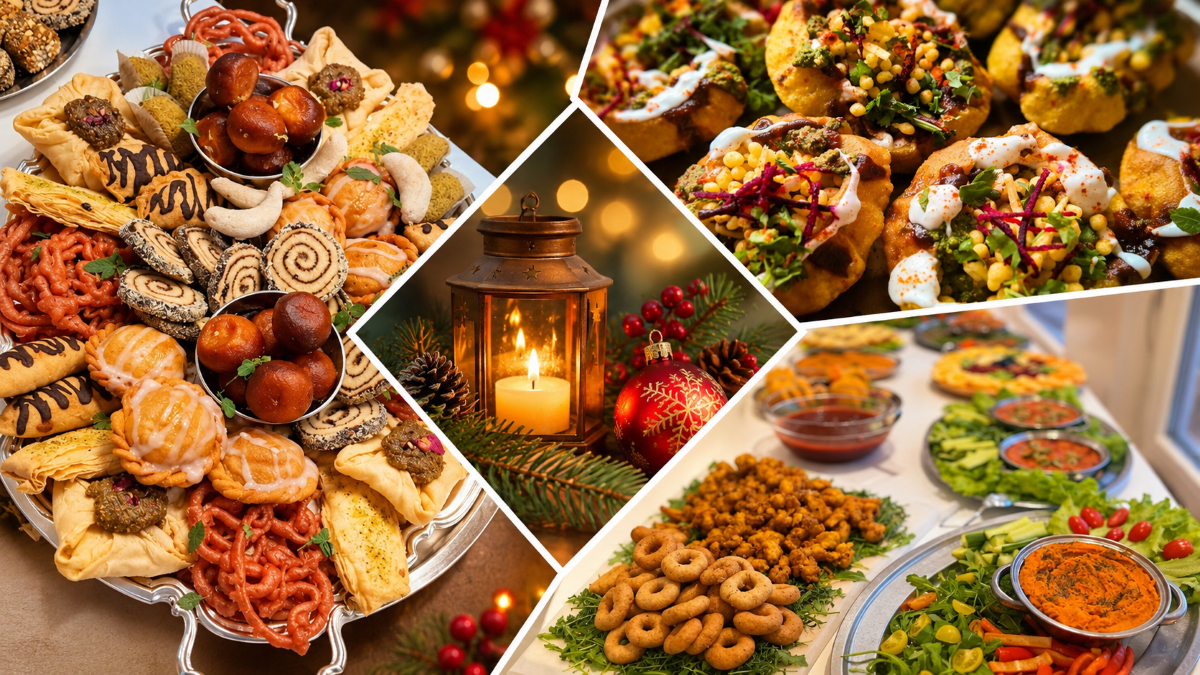
Of course, this also raises a very practical question: what should be served at the festive table?<br/>Devotees follow a vegetarian diet and, as part of their religious practice, eat food that has been prepared in accordance with their tradition and offered to Kṛṣṇa. This sanctified food is called prasādam.
Some devotees discuss in advance with their families what foods they can eat. Others prefer to prepare something delicious themselves, offer it to Kṛṣṇa and bring it along to the family gathering.
As a result, a special Indian sweet or other vegetarian prasādam may find its place on the table alongside traditional Christmas dishes.
What matters is not that everyone follows the same customs, but that we respect one another’s beliefs.
DO CHILDREN IN KRISHNA-CONSCIOUS FAMILIES RECEIVE CHRISTMAS GIFTS?
There is no single answer that applies to everyone.
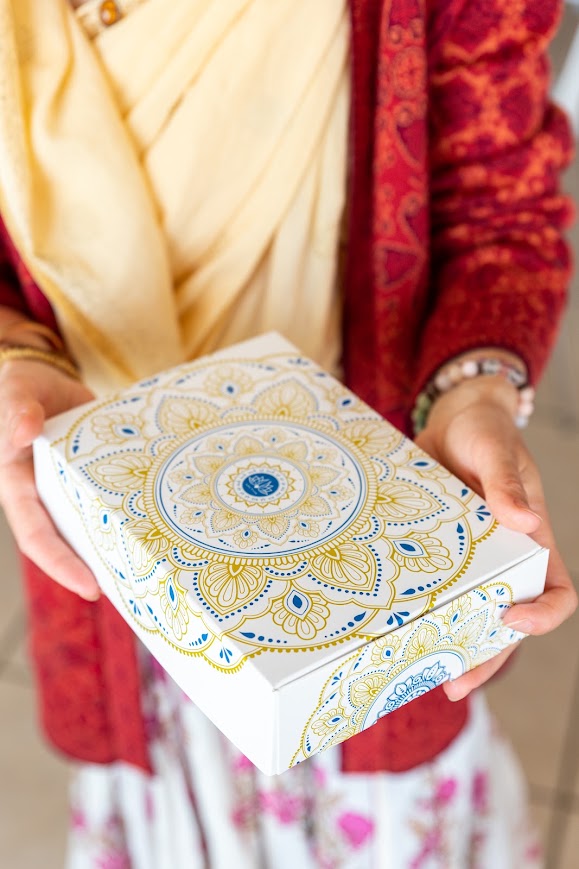
Some devotee families do not celebrate Christmas at all. They do not put up a Christmas tree, nor do they associate gift-giving with this time of year.
Other families, however, preserve some Christmas traditions, particularly when they have young children.
Imagine a child attending a school where their classmates have been talking about Christmas for weeks! They share what gifts they have asked for, how they are going to decorate their Christmas trees, and how much they are looking forward to the winter holidays.
It is not always easy for a young child to understand why their family’s traditions differ from those of others.
This is why some parents choose to include gift-giving or a small family gathering in some form. Others prefer to associate these experiences with their own Vaiṣṇava festivals and explain to their children that different families may have different traditions.
There is no single Christmas family tradition shared by all Krishna devotees.
What they have in common, however, is the desire to pass on their own faith to their children while helping them understand and respect the traditions of others.
WHAT ADVICE DID ŚRĪLA PRABHUPĀDA GIVE REGARDING CHRISTMAS FAMILY GATHERINGS?
Interestingly, this question arose even in the early days of the spread of Krishna consciousness in the West.
In November 1968, Śrīla Prabhupāda wrote a letter to one of his disciples who had asked about sharing a Christmas meal with their family.
Śrīla Prabhupāda advised the disciple to prepare their own food, offer it to Kṛṣṇa and eat it during the family gathering.
He even mentioned that the food offered to Kṛṣṇa could also be offered in honour of Jesus Christ.
Written more than half a century ago, this letter remains an interesting example of how we can uphold our own religious principles while maintaining close relationships with family members who follow different traditions.
Śrīla Prabhupāda did not encourage his disciple to set aside their faith at the Christmas table. Rather, he pointed out that spending time with family and following one’s own religious practices do not necessarily have to be mutually exclusive.
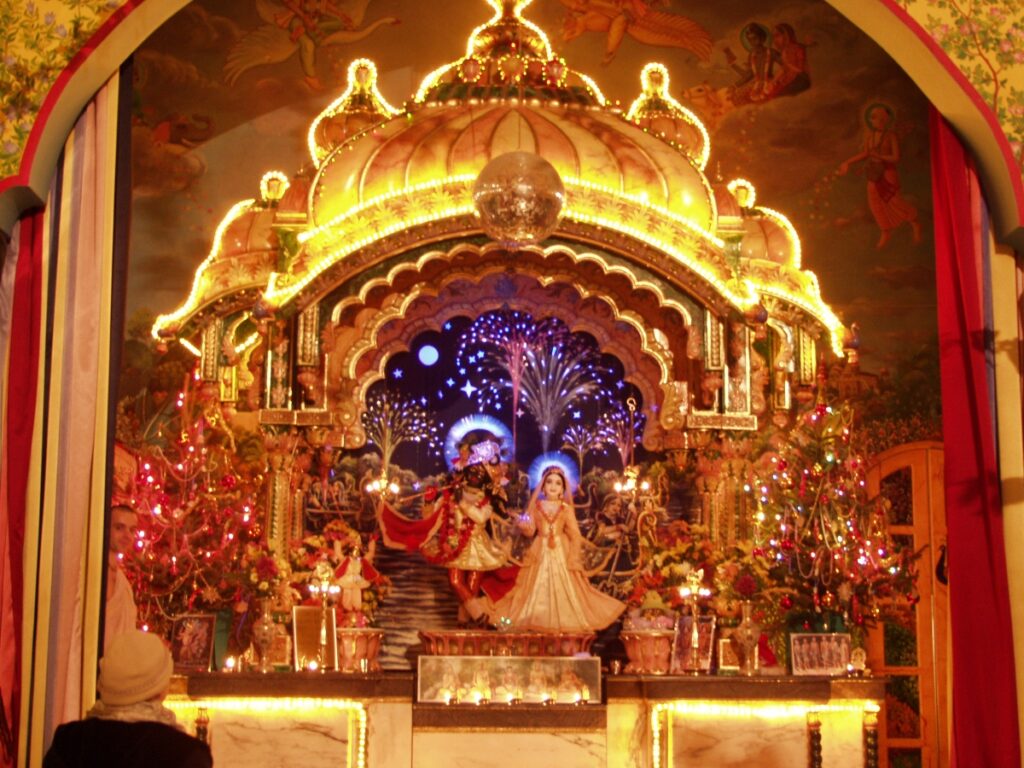
DOES THE CHRISTMAS SPIRIT FIND ITS WAY INTO KRISHNA VALLEY?
Although Christmas is not part of the Vaiṣṇava festival calendar, Krishna Valley is not entirely untouched by the atmosphere of the winter season.
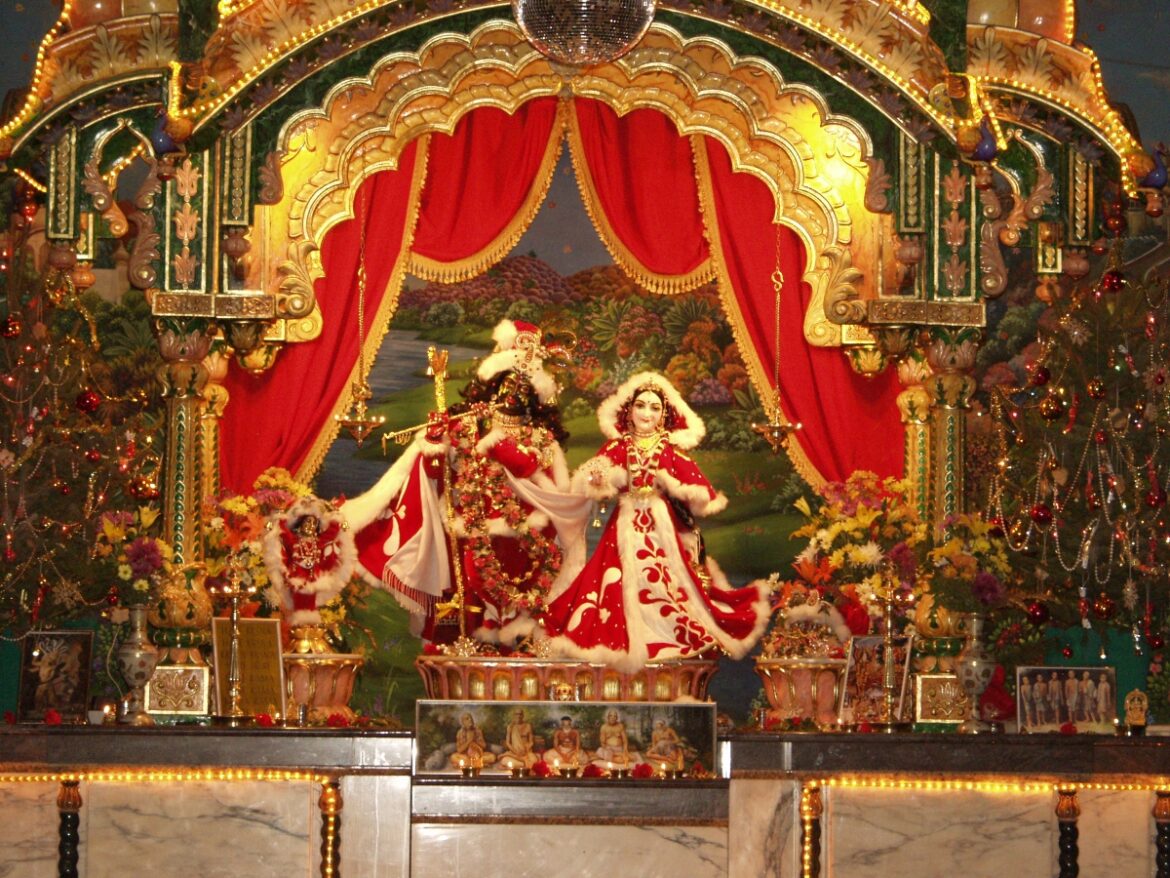
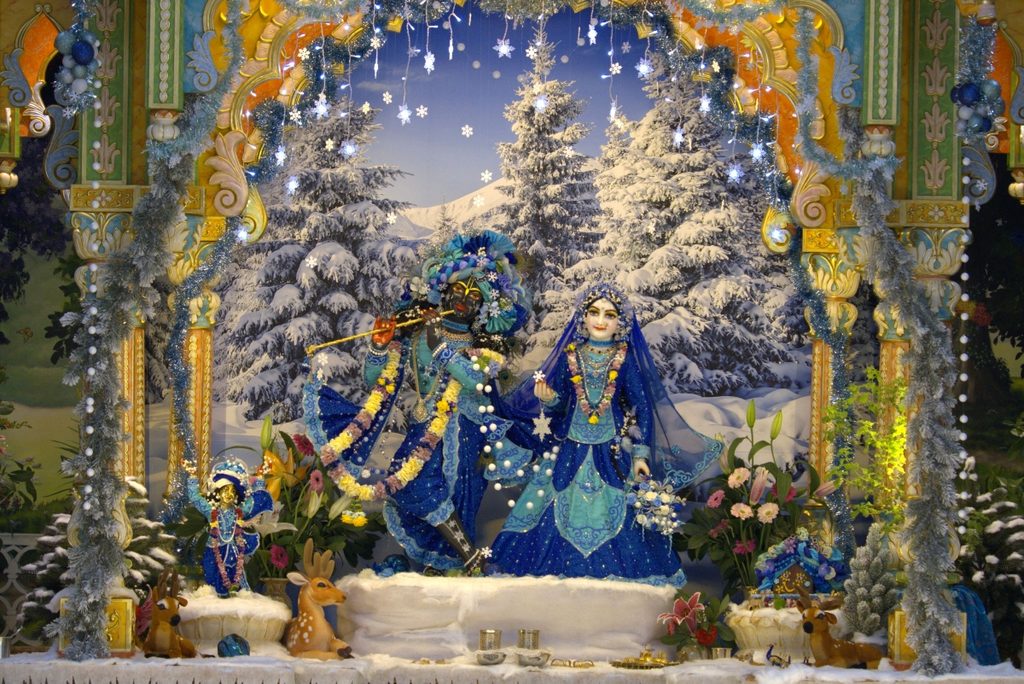
In many Kṛṣṇa temples and farm communities around the world, colours and decorations associated with the winter season or Christmas time can also be seen on the altar.
Such seasonal touches can also be found in Krishna Valley.
However, this does not mean that Christmas religious services are held. Temple life continues to centre on the worship of Rādhā-Śyāmasundara, daily ceremonies, mantra chanting and spiritual practices.
Between 24 and 26 December, daily life in the Krishna Valley community continues according to the usual Vaiṣṇava traditions.
The winter decorations can simply be an expression of our desire to offer something beautiful to Kṛṣṇa in every season.
WE HAVE SOMETHING TO CELEBRATE IN DECEMBER TOO!
Although Christmas is not one of our religious festivals, December is also a special time for Krishna devotees.
During this period, we celebrate Gītā-jayantī, the anniversary of the appearance of the Bhagavad-gītā. We commemorate the day when Kṛṣṇa imparted His teachings to His friend Arjuna on the battlefield of Kurukṣetra. These teachings are preserved in the Bhagavad-gītā, one of the most important sacred scriptures of the Vaiṣṇava tradition.
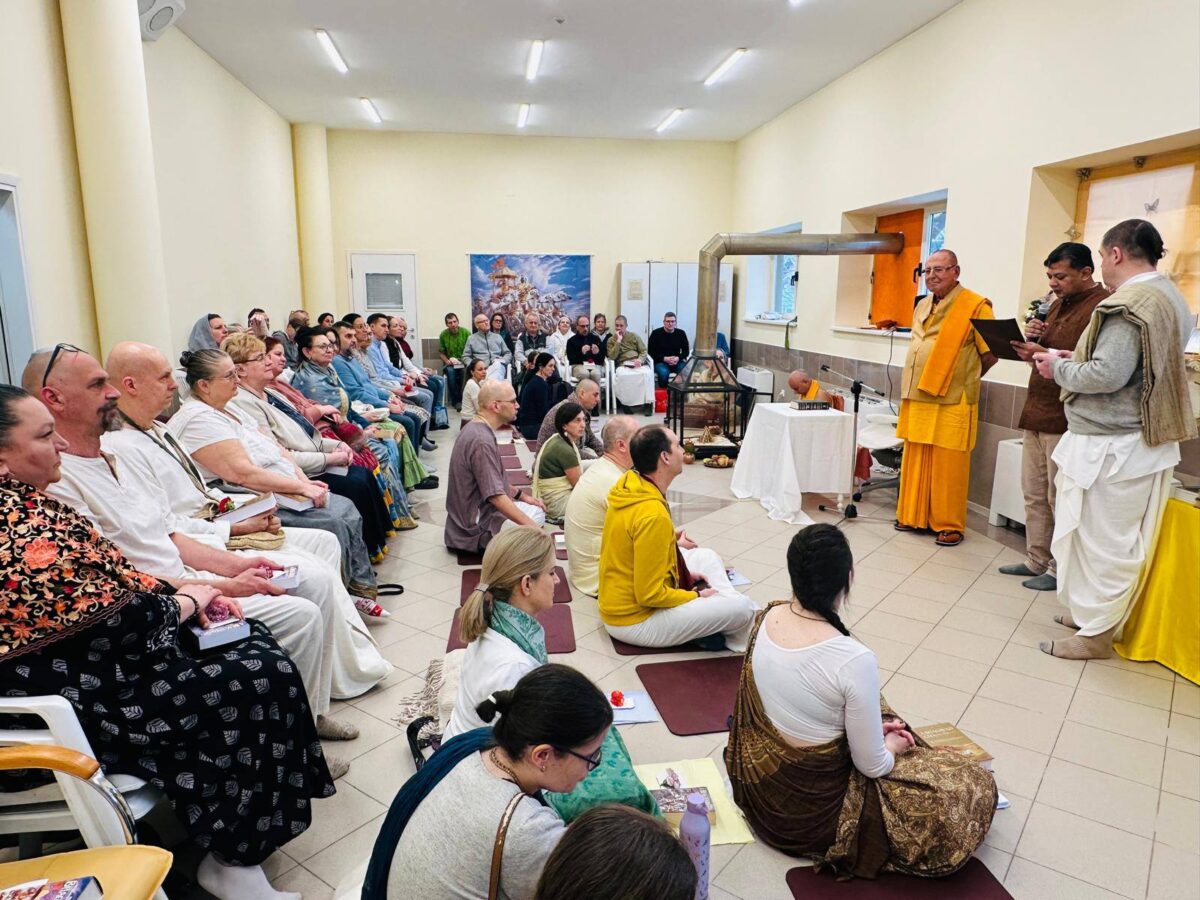
On the occasion of Gītā-jayantī, we hold special spiritual programmes. In many temples, the entire Bhagavad-gītā is recited – all 18 chapters, comprising 700 verses. Sacred fire sacrifices, known as yajñas, are also performed, during which offerings are made into the sacred fire accompanied by the chanting of sacred mantras.<br/>This day gives us an opportunity to deepen our understanding of the teachings of the Bhagavad-gītā and reflect on how we can apply them in our everyday lives.
The winter season is also marked by the Christmas book distribution marathon, which we organise to distribute Śrīla Prabhupāda’s books. During this time, particularly large numbers of Krishna devotees around the world set out to share the Bhagavad-gītā and other spiritual books with those interested in exploring spiritual life.
While many people are searching for Christmas presents, we would also like to offer a gift that can be revisited even years later: a book that inspires reflection and perhaps helps us see life from a new perspective.
AND YET THERE IS A CHRISTMAS LOVE FEAST?
Although we do not observe Christmas as a religious holiday, there is one tradition that receives particular attention during this time of year: helping those in need.
In Hungary, one of the best-known activities of Krishna devotees during the Christmas season is not a religious celebration, but providing support to those in need.
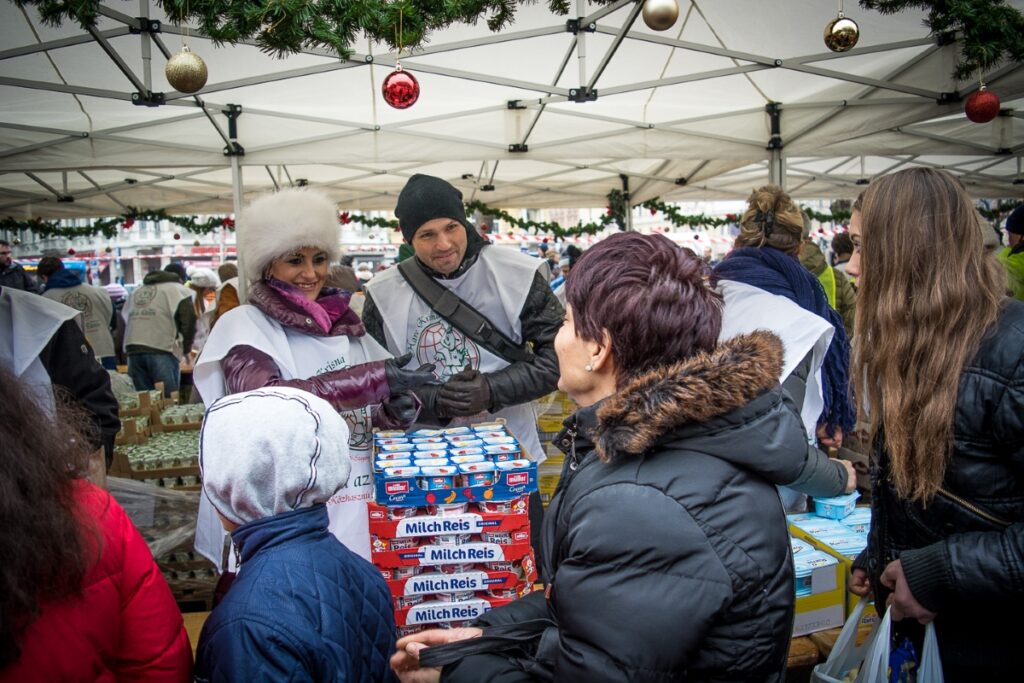
The Hare Krishna Food for Life Mission supports people facing hardship throughout the year by providing hot meals and food parcels. During the festive season, special emphasis is placed on the events known as Christmas Love Feasts.
In Budapest and other cities across Hungary, thousands of people receive hot meals and parcels containing non-perishable food during this period.
Every year, the Food for Life Mission organises large-scale Christmas food distributions. In previous years, as part of this nationwide initiative, we have supported those in need by providing around 10,000 festive meals and several thousand non-perishable food parcels. One of the highlights of the initiative is the three-day Christmas Love Feast in Budapest, which in recent years has been held in Népliget (People’s Park).
But why at Christmas in particular?
Because this time of year can be especially difficult for many people.
While most families gather around a festive table, some struggle to afford even a daily hot meal. The winter cold, higher living expenses and loneliness can make the end of the year particularly challenging.
The aim of the Love Feasts is to give these people an opportunity to experience care, kindness and human compassion.
According to the teachings of Krishna consciousness, every living being is spiritual by nature, and we are all connected to God. Helping others is therefore not merely an act of charity, but also a natural part of our spiritual values.
Perhaps this is one of the most beautiful examples of how we can connect with a celebration from another religious tradition without observing it as our own religious festival.
We may not celebrate Christmas itself, but we wish to help those who are particularly in need of support at this time of year.
WE DON’T HAVE TO CELEBRATE THE SAME HOLIDAYS TO SHARE LOVE
Christmas, then, is not a Vaiṣṇava festival. Devotees follow their own religious traditions and celebrate Kṛṣṇa’s appearance not in December, but on Janmāṣṭamī.
Nevertheless, they can connect with this time of year in many different ways.
Some visit their parents. Some exchange gifts with their children. Others do not observe any Christmas traditions at all. And some spend the festive days distributing hot meals to people they may never have met before.
These differences are not necessarily contradictions.
Rather, they remind us that love and respect do not always take the same form.<br/>We do not have to share the same beliefs or observe the same festivals to care for one another.<br/>Perhaps this is a thought worth taking with us from Krishna Valley as the Christmas season approaches.
A LITTLE SPIRITUAL RECHARGE INSTEAD OF THE CHRISTMAS RUSH
If you would like to escape the Christmas rush during the festive season and experience a different kind of December atmosphere, come and visit Krishna Valley! Our daily spiritual life continues as usual, but the winter landscape, peaceful walks and the unique atmosphere of the temple can offer a completely different way to experience the end of the year.
If you would like to stay for a few days, our guesthouses also give you the opportunity to experience the early morning and evening temple programmes.
We warmly welcome you to Krishna Valley and our guesthouses!
Spend a few peaceful days with us, even during Christmas, leave the hustle and bustle behind, and give yourself the time and space to truly recharge!
Hare Krishna!
With love,
The Krishna Valley Guesthouses Team